
The short answer
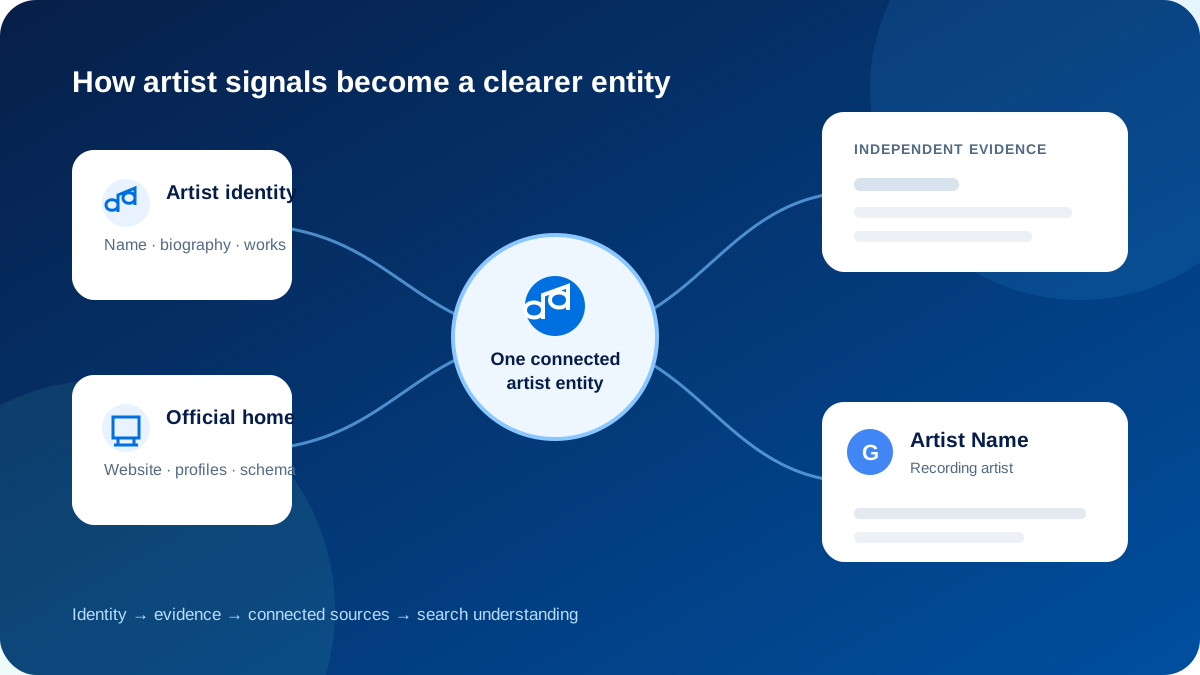
Artists do not submit an application that guarantees a Knowledge Panel. Google says panels are generated automatically when its systems can understand an entity from information available on the open web. Your practical job is to make one artist identity consistently supported by an official website, music and reference records, accurate structured data, and independent sources.
Check your artist name for freeWhat is a Google Knowledge Panel for an artist?
A Knowledge Panel is an information box Google may show when someone searches for a recognised person, group, place, organisation, or other entity. For an artist, it can connect a name with a photograph, occupation, biography, works, official profiles, and related people or organisations.
Google explains that knowledge panels are created automatically from information on the open web. That distinction matters: no agency, publicist, schema plugin, Wikipedia editor, or artist can guarantee that Google will create or display one.
An artist panel represents an entity. A Google Business Profile is designed for businesses serving customers at a location or within a service area. They can look similar, but Google treats them as different products.
The practical process
Seven steps to strengthen an artist’s Knowledge Panel signals
Define one canonical artist identity
Choose the public name you want audiences and data sources to recognise, then document legitimate aliases and former names.
Build an authoritative home
Create an accessible official website with a focused artist biography, releases, credits, contact details, and links to genuine profiles.
Add accurate structured data
Use Person or MusicGroup markup that matches visible page content and connects only profiles that genuinely belong to the artist.
Align music and reference records
Keep names, biographies, locations, genres, members, credits, and identifiers consistent across relevant music and reference platforms.
Earn independent corroboration
Pursue relevant editorial coverage, interviews, reviews, festival listings, label pages, and other sources with real editorial oversight.
Connect the entity graph
Link the official site, artist profiles, works, collaborators, label, and legitimate identifiers so they reinforce the same entity.
Monitor, claim, and correct
Check search regularly. If a panel appears and is claimable, verify through Google; use feedback to suggest supported corrections.
1. Establish one canonical artist identity
Start with the exact public identity you want recognised. Record your stage name, legal name where publicly relevant, legitimate aliases, home country or city, occupation, genres, group membership, and a concise biography. This becomes your reference sheet.
Then compare it with your official website, streaming profiles, social accounts, label page, event listings, interviews, music databases, and publisher or collecting-society records. Minor wording can vary; identity facts should not contradict one another.
Resolve ambiguity before adding more profiles
If another artist uses the same or a similar name, make your entity easier to distinguish with stable qualifiers: location, genre, notable works, label, collaborators, official URL, and consistent imagery. Creating more inconsistent pages increases ambiguity rather than reducing it.
2. Make your official website the identity hub
Your website should make the relationship between the artist, their work, and their official profiles explicit. Include a dedicated biography page, high-quality press photographs, discography or portfolio, verified contact information, and links to profiles you control.
- Use one preferred artist name in the page title, heading, biography, and image descriptions.
- Give releases and important works their own crawlable pages where useful.
- Link to authoritative coverage and official platform profiles in context.
- Keep essential identity content in HTML rather than hiding it inside images or scripts.
- Use a canonical HTTPS domain and avoid duplicate biography pages with competing facts.
3. Add structured data that matches the page
Structured data gives machines an explicit description of visible content. A solo artist will commonly use Person; a band can use MusicGroup. Link genuine profiles with sameAs, and use stable URLs and identifiers where available.
Do not mark up facts that visitors cannot see or claims you cannot support. Google’s structured-data guidelines say markup must represent the main content and must not be misleading. Correct markup can help understanding, but it does not guarantee a Knowledge Panel or rich result.
{
  "@context": "https://schema.org",
  "@type": "Person",
  "name": "Artist Name",
  "url": "https://artist.example/",
  "jobTitle": "Recording artist",
  "sameAs": [
    "https://music-platform.example/artist-id",
    "https://social.example/artist-name"
  ]
}
Validate the implementation and inspect the rendered URL. For creator pages, Google also documents ProfilePage structured data, but it should be used only where the page genuinely fits that definition.
4. Align music databases, credits, and works
For musicians, identity is often distributed across releases, credits, group memberships, and platform IDs. Check that the same artist is connected to the same works across relevant platforms. Correct mistaken merges and split profiles through each platform’s approved process.
Reference databases such as MusicBrainz, Discogs, Wikidata, WorldCat, IMDb, or collecting-society catalogues can be useful when they legitimately apply. They are not boxes to tick blindly. Follow each platform’s sourcing, conflict-of-interest, and eligibility rules; never invent credits, citations, dates, or identifiers.
5. Build independent, relevant corroboration
Official profiles establish what you say about yourself. Independent sources help corroborate it. Useful evidence can include substantive interviews, reviews, festival or venue biographies, recognised award listings, label catalogues, publisher pages, and editorial coverage relevant to the artist’s work.
Quality and relevance matter more than placing the same announcement across many low-value sites. Coverage should exist because there is a genuine story, release, performance, collaboration, or body of work—not solely to manufacture search signals.
6. Connect the same entity across the web
Think in relationships: artist → official website → releases → label → collaborators → verified profiles → independent coverage. Search systems need to distinguish these connections from coincidental name matches.
Use descriptive internal links, consistent profile links, valid canonical tags, crawlable pages, and accurate structured data. Our artist Knowledge Panel service page explains the artist-specific signals included in the assessment.
7. Monitor search, claim eligible panels, and correct facts
Search for the exact artist name and common qualified searches such as “artist name musician”, “artist name songs”, or “artist name city”. Record what appears, the date, and any conflicting entity.
If a panel appears with a “Claim this knowledge panel” option, Google’s verification instructions explain how an artist or authorised representative can verify through an associated account or official profile. Not every panel is claimable. Supported corrections can be suggested through the panel’s feedback option.
A measurable self-audit
The four-layer artist evidence stack
This is a planning framework, not a Google score. Use it to see whether your identity is supported at every layer rather than relying on one platform.
IdentityStable name, biography, location, roles, aliases
Owned authorityOfficial site, artist pages, crawlable works, schema
Platform alignmentMusic profiles, credits, identifiers, consistent links
Independent corroborationEditorial coverage, trusted catalogues, awards, events
A 20-point evidence inventory
Score each category from 0 to 4 based on evidence you can verify today. The total is an internal completeness check only—it is not Google’s scoring system and does not predict panel eligibility.
A practical 30/60/90-day artist action plan
Fix the foundation
Document the canonical identity, audit name conflicts, repair the official website, consolidate profile links, and correct factual mismatches you control.
Connect the evidence
Implement accurate structured data, align releases and credits, improve biography pages, and request legitimate corrections from relevant platforms.
Strengthen and monitor
Develop genuinely newsworthy editorial opportunities, monitor search presentation, document changes, and use official feedback or claiming tools where available.
The schedule is an operational framework, not a promise that Google will create or update a panel within 90 days.
Common mistakes that weaken artist entity signals
- Using several stage-name spellings without documenting their relationship.
- Creating unsupported Wikipedia or Wikidata entries as promotional assets.
- Publishing misleading schema or marking up information that is not visible.
- Buying large quantities of duplicated, low-quality press placements.
- Allowing releases and credits to remain split across duplicate artist profiles.
- Confusing a local Business Profile with an artist Knowledge Panel.
- Claiming that schema, PR, or a particular source guarantees a panel.
Frequently asked questions
Can an artist create a Google Knowledge Panel directly?
No. Google says knowledge panels are generated automatically from information on the open web. An eligible panel may later be claimable by the person or an authorised representative.
Does adding schema guarantee a Knowledge Panel?
No. Accurate structured data can help systems understand a page, but Google explicitly states that structured data does not guarantee a search feature.
Do artists need Wikipedia?
Not necessarily. Wikipedia can be a strong reference when the subject meets its independent notability and sourcing rules, but it should never be created as an advertising page or with unsupported claims.
How long does an artist Knowledge Panel take?
There is no official fixed timeline. Discovery, recrawling, source quality, identity ambiguity, and Google’s own systems all affect whether and when a panel appears.
Is a Knowledge Panel the same as a Google Business Profile?
No. Google describes Business Profiles as a separate product for businesses serving customers at a location or within a service area.
Sources and further reading
Start with your current evidence