
When a potential customer asks about your business, a name alone is not enough. They need to understand what you offer, where you operate and whether you are relevant to their situation. An audit should uncover information that makes those decisions difficult: an old service description, a conflicting location or a profile for a different company with the same name.
What to do first
Choose a small set of real customer questions. Record what your official pages and tested AI answers say, identify the exact gaps, and attach a correction to its supporting source. Publish the approved changes before measuring again.
1. Start with the questions that qualify a customer
For the fictional Oak & Stone Accountants example, useful questions include “Do they offer monthly payroll?”, “Do they serve businesses in Greater Manchester?” and “Who founded the firm?” Each question tests a different part of the identity. A branded question checks recognition; an unbranded provider question checks whether the business is selected among alternatives.
Write down what a satisfactory answer would contain before running the test. Include service scope, customer type and location where relevant. This gives you a factual reference rather than a goal of getting any mention at all. Avoid wording that tells the assistant to recommend your business.
2. Compare the sources describing the business
Review the homepage, About page, service pages, contact details and genuine business profiles. Record the exact URL and the claim it supports. Include relevant registry or professional records when they establish a particular fact, but do not treat a registry listing as proof of service quality.
Separate a registered office from the area where services are delivered. A London registered address and a Manchester service area can both be correct. Label the difference rather than forcing every address to match. Similarly, distinguish a founder’s former company from their current business.
- Legal and trading names, with a source for any claimed registration identifier.
- Official domain and confirmed company profiles.
- Services, customer types, service areas and important limitations.
- Founder and company relationships supported by specific pages.
- Conflicting, unavailable and outdated sources kept visible.
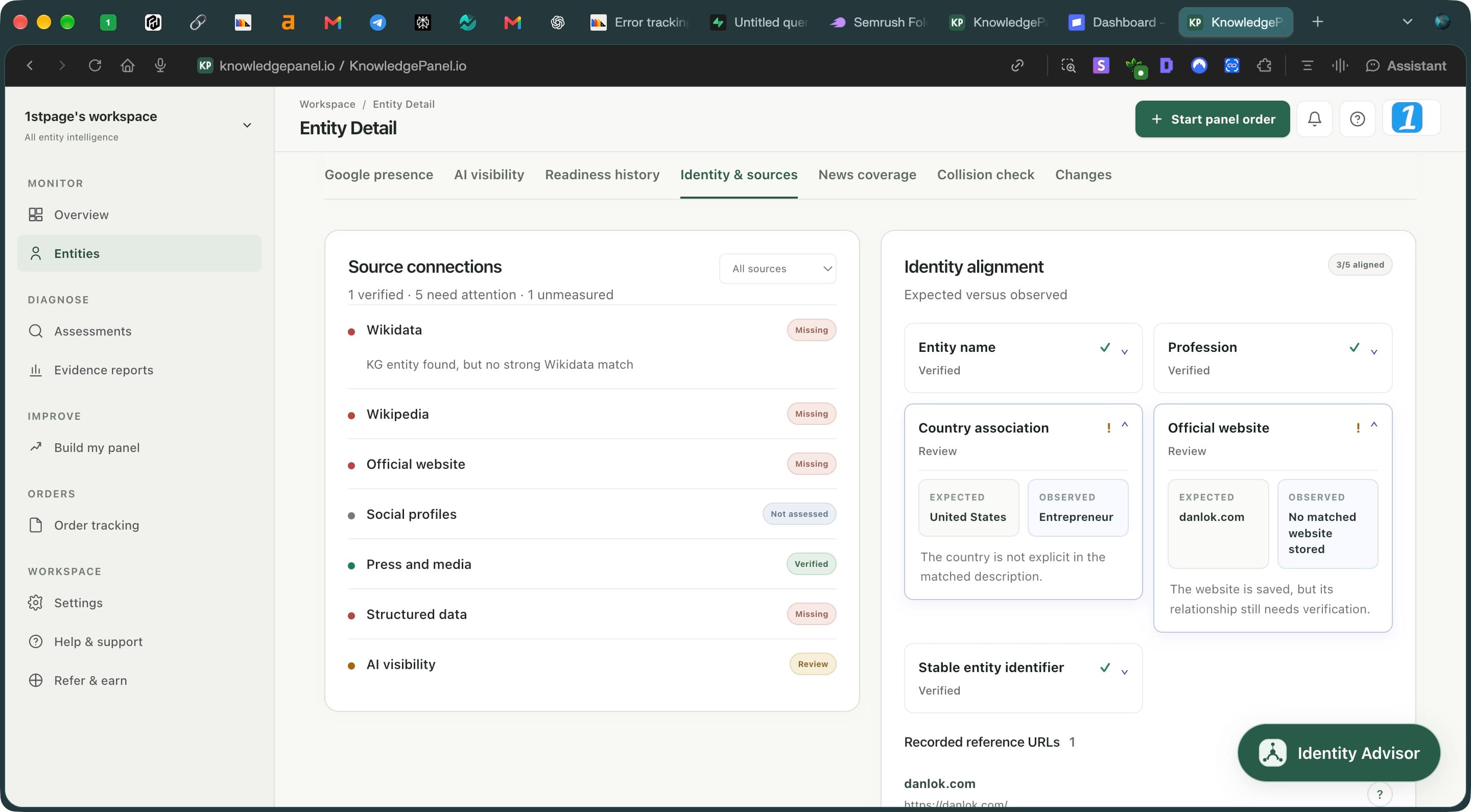
- Read the channel status. Not assessed means unmeasured, not absent.
- Expand a review item to compare expected details with observed evidence.
- Read the explanation before changing a fact or website connection.
3. Turn each gap into a reviewable intervention
In our fictional example, a profile suggests London-only coverage while the service page describes Greater Manchester. The intervention is to confirm the meaning of each location and update the misleading description. Its completion check is a review of the published pages, not a promise that an AI answer will immediately change.
A second gap is a payroll service named in a footer with no explanation. A useful service page would describe the customers served, the process, exclusions and how to enquire. Base those details on the business’s actual offering. Do not add invented credentials, pricing or customer results to make the page sound authoritative.
The report can keep the saved readiness baseline beside these interventions. Approved service facts and evidence-linked relationships can appear when the identity workspace contains eligible reviewed records. Missing records should stay explicit.
4. Publish a connected business record
Use the official website as the home for approved business information. Your developer can express the relevant facts through Organisation or an appropriate business subtype, with service records connected to the provider. Use confirmed sameAs links for pages identifying the same organisation; an article that merely mentions it is not the same entity.
Google documents organisation markup as a way to communicate administrative details and disambiguate a business. This does not establish preferential treatment across all AI engines. Keep the human-readable service content complete and verify that the published page is accessible.
5. Retest without confusing activity with impact
Repeat the agreed questions using comparable product and retrieval settings. Save returned answers and source links, including unsuccessful or unavailable checks. Inspect whether the correct business is named and whether the answer accurately describes its services, location and relationships.
A before-and-after improvement is useful evidence, but other pages and model behaviour can change too. Record when your corrections went live and repeat observations over time. If you want stronger evidence that the intervention caused an improvement, compare a similar set of unchanged entities as well.
Connect any commercial claim to observed enquiries or conversions. An unbranded recommendation is different from an accurate answer to a branded question. The audit should help you understand that difference rather than rolling both into a single headline score.
Frequently asked questions
Does a clear entity record make my business appear in every AI answer?
No. Customer relevance and each platform’s retrieval and selection processes still matter. Measure discovery separately from factual accuracy.
Should I replace useful service content with JSON-LD?
No. Structured data complements visible content. Publish practical information customers need and keep the markup consistent with it.
What can I fix first?
Start with a factual conflict or unclear official website connection that you control. Document the source and verify the published correction before changing more pages.
Check how your business is represented
Find the public identity signals and evidence gaps behind your business information.
Start a business identity check →