
A common name can connect to several different people. A biography can describe a previous employer, an author profile can omit the official website, and a publication can use a different version of the name. A personal identity audit should establish which records belong to you before creating more content about you.
What to do first
Choose your preferred public name and a canonical professional page. Attach sources to your roles and work, confirm genuine profiles and separate yourself from namesakes. Publish a reviewed biography and appropriate structured data, then check identity accuracy and attribution in recorded answers.
1. Define the professional identity you want to publish
Write a concise description that distinguishes you using relevant facts: your role, organisation, area of work and public professional location where useful. Keep former and current roles separate. If you use an alternate name professionally, explain it on your official page instead of leaving visitors to infer that the names refer to the same person.
The fictional Alex Morgan profile in our sample identifies a founder and software engineer connected to Northstar Analytics. The company is a separate organisation. An unrelated designer called Alex Morgan should not contribute profiles, images or evidence to this record. This is an example workflow, not a real client result.
2. Connect roles and work to original evidence
For employment or a founder role, identify a relevant organisation page alongside the person’s biography. For published work, record the original article, book or other work and its author credit. A publisher author page can help connect several works; a copied biography alone does not establish authorship.
Describe the relationship precisely. Speaking at an event is different from organising it, and contributing to a publication is different from being employed by its publisher. Review the statement that each page supports rather than treating all mentions as interchangeable authority.
- Preferred public name and official website.
- Current roles, dated where appropriate, with supporting sources.
- Organisation relationships linked to the correct company or institution.
- Original work URLs and author or contributor credits.
- Confirmed profiles separated from unverified namesakes.
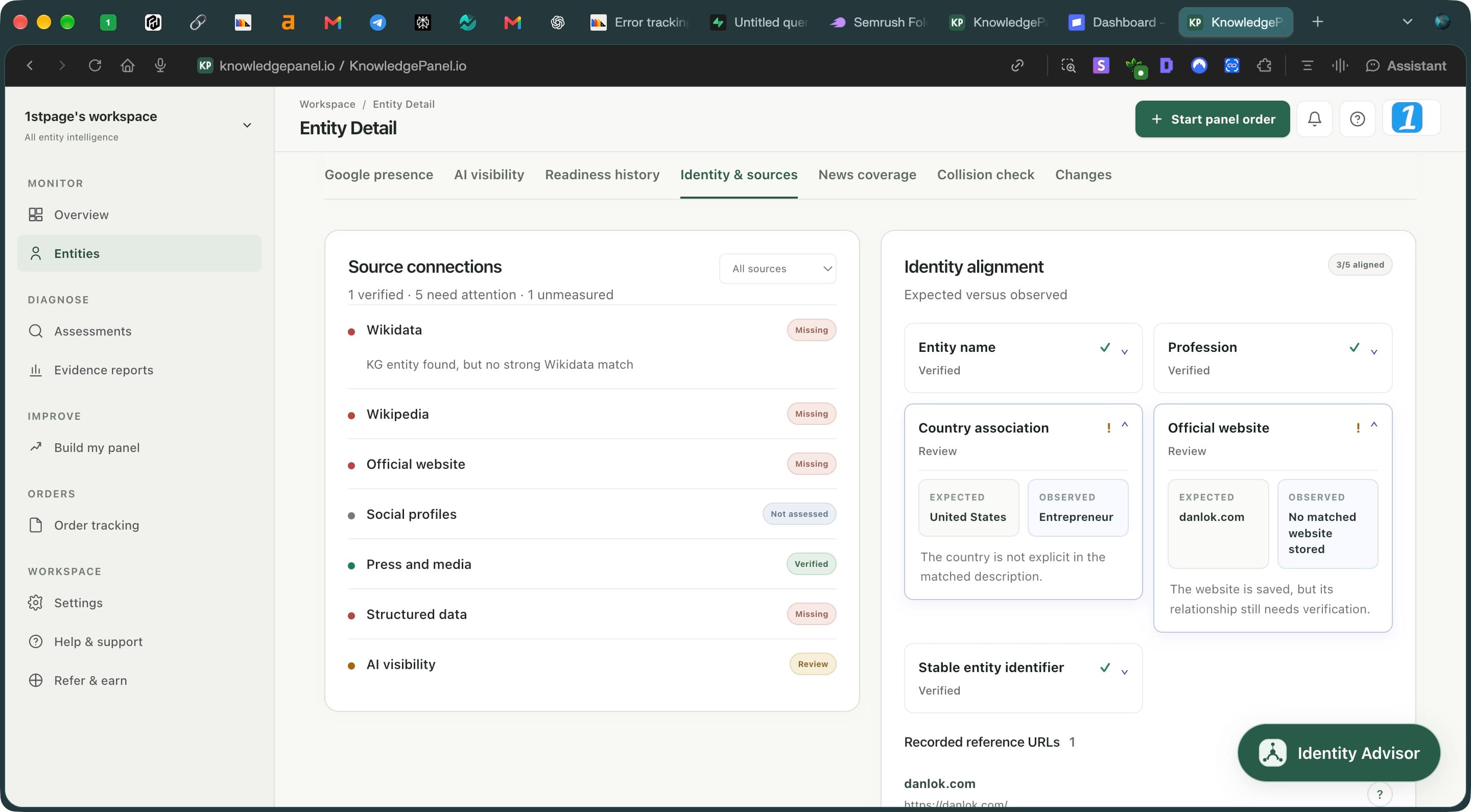
- Read the channel status. Not assessed means unmeasured, not absent.
- Expand a review item to compare expected details with observed evidence.
- Read the explanation before changing a fact or website connection.
3. Publish relevant information you choose to make public
A professional identity does not need a home address, private telephone number or date of birth. Choose public contact information and a level of location detail that serves your audience. Record permission and review the proposed content before publishing images or sensitive biographical facts.
When a fact is disputed, preserve the disagreement for review. An AI-generated biography should not settle whether a qualification, award or role is genuine. You can omit an unsupported claim while gathering the appropriate evidence.
4. Express the identity without inventing credentials
A personal record can use Schema.org’s Person vocabulary to connect a name, official URL and relevant organisation relationships. Where the page genuinely fits Google’s documented ProfilePage use cases, its mainEntity identifies the person or organisation the profile describes. Follow the requirements for that feature rather than assuming every biography qualifies.
Keep the visible biography and machine-readable facts consistent. Confirm sameAs URLs belong to the same person. Use stable identifiers for the person and organisation so the relationship does not merge them into one object. A valid syntax check is an implementation check, not independent verification of the biography.
{
  "@context": "https://schema.org",
  "@type": "Person",
  "@id": "https://alexmorgan.example/#person",
  "name": "Alex Morgan",
  "url": "https://alexmorgan.example/",
  "jobTitle": "Founder and software engineer",
  "worksFor": {
    "@type": "Organization",
    "@id": "https://northstaranalytics.example/#organization",
    "name": "Northstar Analytics"
  }
}5. Test recognition and attribution separately
An identity question might ask who Alex Morgan, founder of Northstar Analytics, is. A relationship question might ask who founded Northstar Analytics. A work question might ask who wrote a named guide. These questions should not all receive credit simply because the name appears somewhere in the answer.
Record whether the correct person is identified, which roles are attributed and which sources are cited. Save the full question and answer with the date and available model details. If the system describes a namesake, investigate the profile and source connections before rewriting accurate facts.
KnowledgePanel.io’s personal report keeps public assessment signals alongside available reviewed facts, relationships and AI observations. Pro supports ongoing maintenance and prepared publishing material. Review and publish the changes: a private report alone does not make the person’s record crawlable.
Frequently asked questions
Can I build a structured identity without being famous?
Yes. You can organise accurate public professional facts and sources. Wikipedia eligibility and Knowledge Panel appearance are separate questions.
Should I publish every detail about myself?
No. Use relevant professional information you choose to publish. Exclude unnecessary private details.
Does this make AI recommend me as an expert?
No automatic recommendation follows. Make your work and evidence clear, then measure whether answers identify and attribute it accurately.
Audit the connections behind your name
Review your personal identity signals, sources and next steps for a clearer public profile.
Start a personal identity audit →